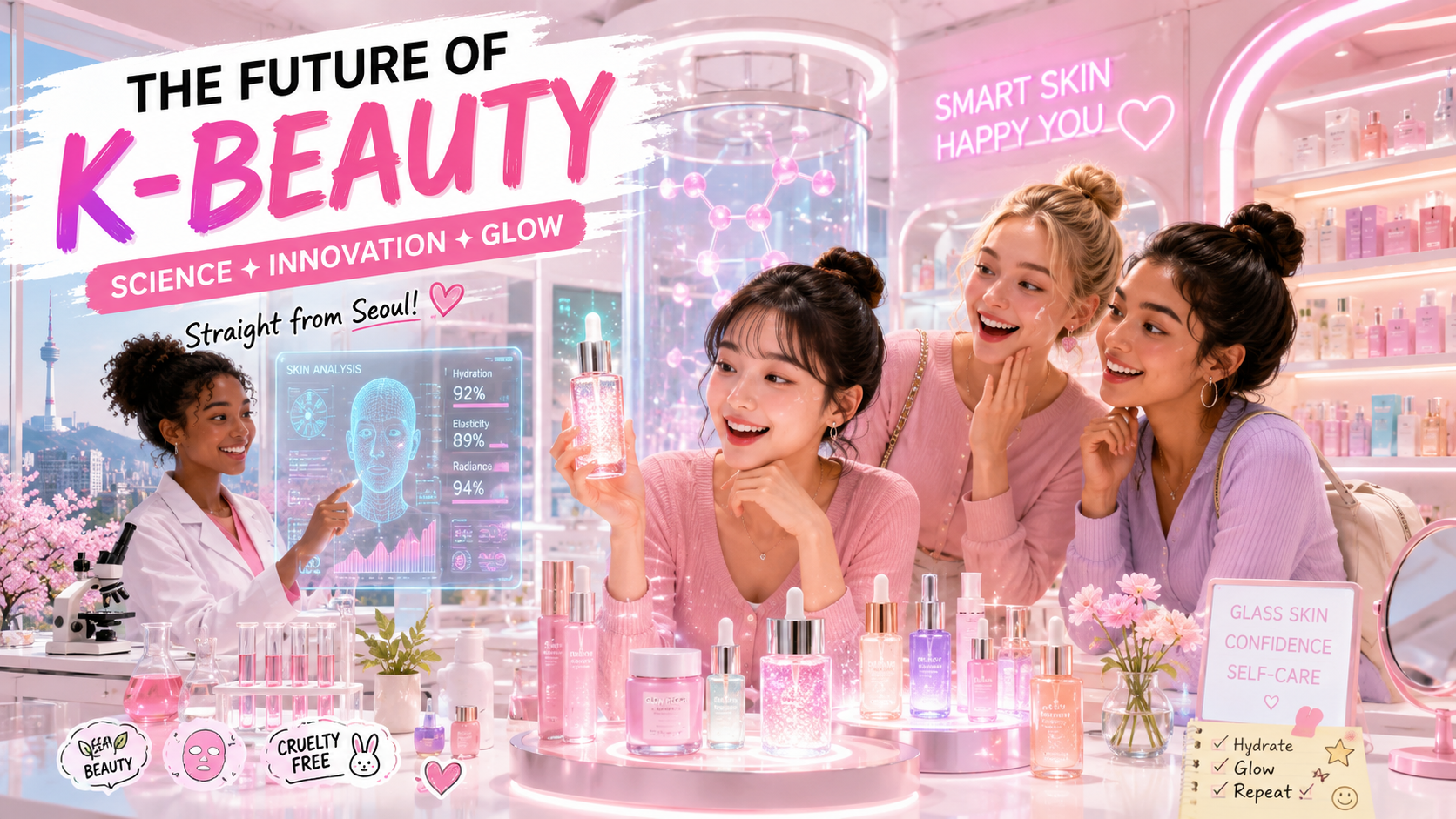
K-Beauty is evolving from cute packaging and glass skin trends into science-backed skincare powered by PDRN, exosomes, peptides, spicules, and skin barrier technology.
For years, K-Beauty was known for adorable packaging, sheet masks that looked like animal faces, and the magical promise of “glass skin.”
And honestly? We loved it.
But in 2026, K-Beauty has entered a new era. It is still pretty. It is still playful. But now, it is also walking into the room wearing a lab coat.
Welcome to the age of science-driven K-Beauty.
Korean skincare is no longer just about looking cute on your bathroom shelf. It is about ingredients, delivery systems, skin barrier repair, slow aging, and formulas that sound like they escaped from a dermatology conference.
And somehow, Korea made even that look aesthetic.
From “Cute Cream” to “Clinical Glow”
Old K-Beauty was famous for fun textures, soft colors, and packaging so cute you almost felt bad opening it.
New K-Beauty is asking a different question:
“What is actually happening inside your skin?”
That is why ingredients like PDRN, exosomes, peptides, EGF, cica, beta-glucan, and spicules are suddenly everywhere. Beauty experts have pointed out that Korean skincare is moving toward regenerative ingredients, skin longevity, and clinical credibility rather than simple “instant glow” claims.
In other words, your moisturizer is no longer just moisturizing.
It is giving a TED Talk to your skin cells.
The Rise of PDRN: The Ingredient Everyone Is Talking About
One of the biggest buzzwords in K-Beauty right now is PDRN, short for polydeoxyribonucleotide.
Sounds complicated? Totally.
Sounds like a robot password? Also yes.
PDRN is commonly described as a regenerative skincare ingredient, often linked to skin repair, hydration, and recovery. Dermatologists note that PDRN has been used in aesthetic treatments and is now appearing in more over-the-counter skincare products such as serums, creams, and masks. However, experts also caution that it is not magic in a bottle, and sensitive skin types should patch-test first.
So, should we call it a miracle?
Not quite.
Should we call it one of the most interesting K-Beauty ingredients right now?
Absolutely.
Exosomes, Peptides, and the “Tiny but Mighty” Era
K-Beauty is also getting very excited about exosomes and peptides.
Peptides are already loved in skincare because they are often associated with firmness, repair, and smoother-looking skin. Exosomes, meanwhile, are part of a newer wave of skincare conversation around cell communication and skin renewal.
This is where K-Beauty becomes fascinating. The industry is not just selling “pretty skin” anymore. It is selling the idea of smarter skin.
Not louder.
Not harsher.
Smarter.
This is a big shift from the old “scrub until your face feels like a clean plate” beauty era. Korean beauty is saying:
Protect the barrier. Calm the skin. Support recovery. Glow responsibly.
Very adult. Very elegant. Very “I drink water and answer emails on time.”
Spicules: The Tiny Needles That Sound Scary but Are Trending
Another hot topic is spicule technology.
Spicules are tiny needle-like structures often used in skincare to help improve ingredient delivery and support skin renewal. Some Korean products use this concept to create a mild prickly sensation on the skin.
Yes, “tiny needles” in skincare sounds like something your face did not consent to at first.
But this trend is gaining attention because it fits perfectly with the new K-Beauty direction: not just applying ingredients, but helping them work more effectively. Beauty trend reports for 2026 have highlighted micro-needle serums and spicule-related products as part of the next wave of K-Beauty innovation.
Of course, this type of product may not be ideal for everyone, especially people with very sensitive or irritated skin. The new rule is simple:
Trendy is cute. Burning your face is not.
Skin Barrier Is the New Main Character
If K-Beauty were a drama, the skin barrier would be the quiet second lead who suddenly becomes everyone’s favorite.
For years, Korean skincare has emphasized hydration and gentle layering. Now that philosophy is becoming even more important. Ingredients like cica, beta-glucan, ceramides, and calming botanicals are popular because consumers want products that do not just brighten the skin, but help it stay balanced and resilient.
This matches the global beauty movement toward skin longevity, which focuses less on fighting age and more on maintaining long-term skin health. Dermatology experts also point out that sunscreen and proven skincare basics still matter, even as new longevity ingredients become trendy.
Translation:
You can buy the fancy serum.
But please, bestie, still wear sunscreen.
Why the World Is Paying Attention
K-Beauty is not just trending on TikTok. It is becoming a serious global business.
South Korea’s cosmetics exports reached a record high of about $11.43 billion in 2025, up 12.3% from the previous year, according to data reported from Korea’s Ministry of Food and Drug Safety.
That number tells us something important.
K-Beauty is no longer a niche corner of the beauty world. It is becoming one of the global engines of skincare innovation.
And the reason is simple:
Korean brands are very good at combining three things:
Science + trend speed + emotional design
They make products that feel advanced, look beautiful, and arrive just in time for the internet to become obsessed.
That is not luck.
That is strategy wearing lip tint.
The Fun Part: K-Beauty Still Has Personality
Here is the best thing about this new science era: K-Beauty has not become boring.
It still has cute packaging.
It still has jelly textures.
It still has pastel colors.
It still has products that look like they belong in a K-drama bathroom scene.
But now, behind that pretty bottle, there may be peptides, PDRN, exosomes, microbiome-friendly formulas, or barrier-repair technology.
It is like meeting someone who looks like a soft pastel cloud, then finding out they have a PhD in biochemistry.
Honestly? Iconic.
Final Thoughts
K-Beauty used to be known for making skincare fun.
Now, it is making skincare smarter.
The future of Korean beauty is not just about looking dewy for a selfie. It is about understanding the skin as a living system that needs balance, protection, recovery, and time.
So yes, K-Beauty is still cute.
But now it is cute with data.
Cute with peptides.
Cute with a lab report.
And that might be exactly why the world cannot stop watching.
Why Korean Convenience Stores Feel Like Tiny Theme Parks
What Happens When You Play the Trumpet: The Golden Instrument and Its Funny Little Squeaks
Leave a Reply