Meta Description
BTS’s Mexico City visit shows how K-pop has become more than music — it is now culture, economy, tourism, and global soft power wrapped in purple.
When BTS arrives in a city, something unusual happens.
It is not just a concert.
It is not just fans screaming outside a venue.
It is not even just seven global superstars stepping onto a stage.
It becomes a citywide moment.
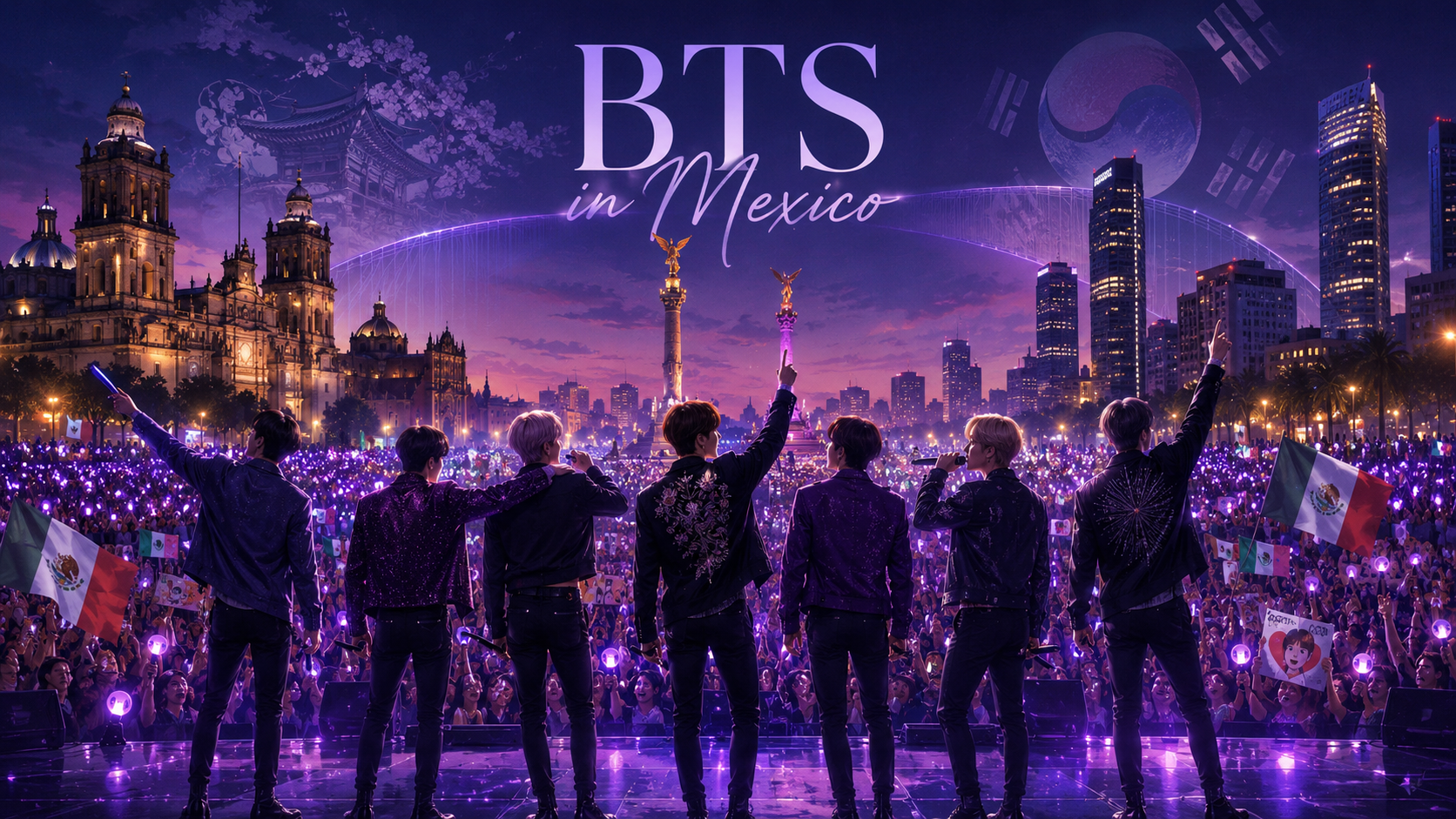
That is exactly what happened in Mexico City, where BTS met Mexican President Claudia Sheinbaum ahead of their concerts and received a commemorative plaque. Around 50,000 fans reportedly gathered near the National Palace to welcome them, turning a political landmark into a sea of purple energy.
And honestly, that is peak BTS.
Most artists promote an album. BTS accidentally promotes a whole country-to-country friendship.
More Than Music
BTS’s Mexico visit shows why K-pop has become one of South Korea’s most powerful cultural exports. A few years ago, people described K-pop as catchy music, sharp choreography, and beautiful music videos.
Now? It is bigger.
K-pop moves fashion.
K-pop moves tourism.
K-pop moves food, beauty, language learning, and even local economies.
According to reports, the Mexico City Chamber of Commerce estimated BTS’s concerts could generate around $107.5 million in economic impact. That includes hotels, restaurants, transportation, merchandise, and everything fans spend while chasing the purple dream.
In other words, ARMY does not just buy tickets.
ARMY books flights.
ARMY fills hotels.
ARMY buys light sticks.
ARMY eats, shops, posts, streams, and somehow makes the local economy say, “Gracias.”
Why Mexico Matters
Mexico is not a random stop on the tour map. It is one of the strongest K-pop markets in the world. YNA reported that Mexico ranks as the world’s fifth-largest market for K-pop, with BTS being the most-streamed act among local K-pop fans based on Spotify’s 2025 figures.
That explains the emotional welcome.
For many Mexican fans, BTS is not just a group from Korea. BTS is comfort, motivation, identity, and connection. Their songs have crossed language barriers because emotion does not need subtitles.
A chorus can travel faster than a passport.
K-Pop as Soft Power
Soft power sounds like a serious political term, but BTS makes it easy to understand.
It means influence without force.
No speeches. No pressure. No official campaign.
Just music, stories, and fans who genuinely care.
Al Jazeera recently described BTS’s comeback tour as part of South Korea’s global soft power drive, noting how interest in BTS has helped spread attention toward Korean culture, including food and cosmetics.
That is the real magic.
Someone discovers BTS.
Then they try Korean food.
Then they watch a K-drama.
Then they learn Korean phrases.
Then suddenly they are explaining kimchi jjigae to their friends like a certified Seoul tour guide.
It is a cultural rabbit hole, but with better choreography.
The Bigger Picture
BTS in Mexico proves one thing clearly: K-pop is no longer just entertainment.
It is a bridge.
A bridge between Korea and Latin America.
A bridge between fans and culture.
A bridge between music and economy.
And when 50,000 people gather just to welcome a group before the concert even begins, you know something bigger is happening.
BTS did not just bring songs to Mexico.
They brought a moment — loud, emotional, purple, and unforgettable.
Best Trumpet Pieces to Listen To: Golden Sounds That Instantly Change the Mood
Why Netflix’s New No.1 K-Drama “Sold Out on You” Is the Sleepless Romance Everyone Is Talking About
Why April 2026 Is a Turning Point for K-Drama: Less Romance, More Everything Else


Leave a Reply